
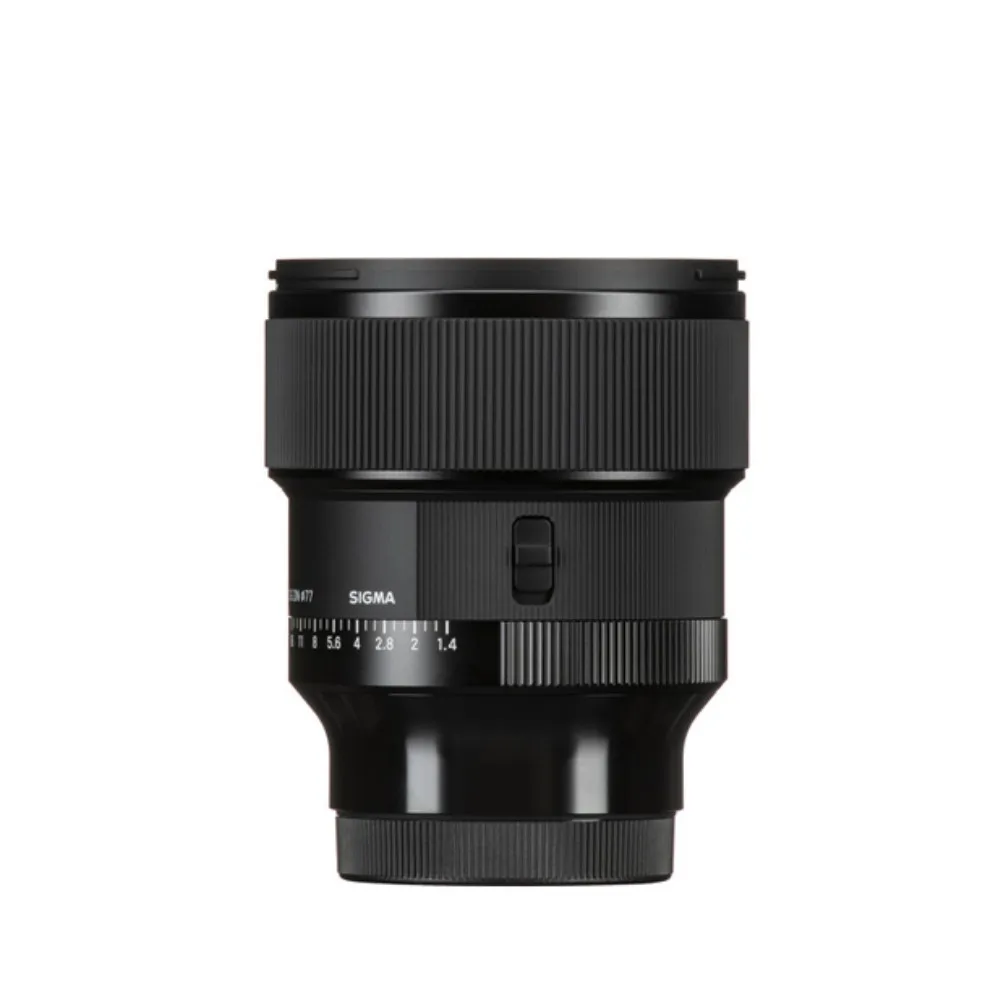
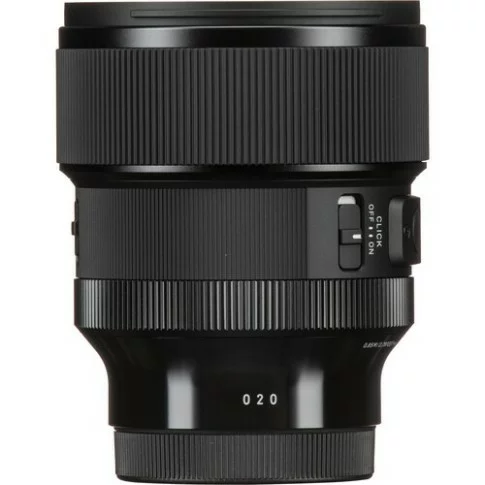

Description
Sigma 85mm f1.4 Art DG DN
Gadget
A classic portrait-length lens updated for full-frame mirrorless
systems, the Sigma 85mm f/1.4 DG DN is an Art-series prime characterized by its advanced and updated optical
design, sleek profile, and bright design. The f/1.4 maximum aperture enables working in low-light conditions and
also provides increased control over depth of field for achieving shallow depth of field effects.
Mount
Sony E
Color
Black
Diameter
94 mm
Elements
Elements: 15
Features
Aspherical, Dust-proof, Splash-proof, Ultrasonic Motor, With Lens Case, With Stepping Motor (STM)
General
Filter Size
77 mm
Focus Adjustment
Automatic Adjustment, Manual Adjustment
Length
127 mm
Minimum Aperture
F/16
Minimum Focal Distance
850.9 mm
Type
Fixed
Weight
0.63 kg
Maximum Aperture
f/1.4
Fixed Focal Length
85 mm
Specialty Type
Telephoto
Gadget
Sigma 85mm F1.4 DN ART Review
Dustin Abbott
August 6th, 2020
The arrival of the Sigma 85mm F1.4 in late 2016 left me very conflicted, which is reflected in my
review of that lens. On one hand, there was no question that the lens was very strong optically (one of
the best to date), though there were a few quirks that I felt necessary to point out. What mostly left me
conflicted was not the optical performance, however; it was the massive size. The lens was a true beast,
towering over other 85mm lenses and weighing in closer to a 70-200mm F2.8 zoom than a typical 85mm prime. The
Sony FE version of that lens that arrived in 2018 pushed me into negative territory, as the lens
in Sony FE form actually got larger and heavier still. I just felt that there were more compelling 85mm options
on Sony full frame mirrorless, and now the most compelling alternative has arrived…from Sigma. Sigma clearly
shared my sentiments, as they have followed up that lens with a purposely designed from-the-ground-up new lens
for Sony and Leica full frame mirrorless. The Sigma 85mm F1.4 DN ART is the lens we’ve been
waiting for. Sigma has dramatically shrunk the size of the 85DN (as we’ll call it for brevity), making a richly
featured, optically excellent, but nicely compact lens that is about half the size and weight of its
predecessor.
Gadget
Sigma has long demonstrated that they can design optical instruments that perform up to the standards of the very
best, but what they’ve not often demonstrated is the ability to house these amazing optics in reasonably sized
lenses. I’ve long lamented the trend where every new Sigma lens crept ever larger even as their ability to
produce amazing optics steadily improved as well. But Sigma seems to have a new philosophy in their most recent
FE releases (including the excellent 100-400mm F5-6.3 DN OS telephoto) where they are clearly
working on having both the size and performance in balance. Never has this been more obvious than with the new
85DN.

Our job here is to explore in detail whether or not Sigma has managed to retain the excellent optical performance
of the previous generation ART lens (which will now be phased out on Sony) in their quest to slim down the new
lens. The good news is despite a few quirks, Sigma has managed to produce a lens that I really love…one with
both high optical performance and charming character.
Gadget

To help you determine if the 85DN is for you, I’ve arranged to have the three other FE F1.4 alternatives all on
hand to compare with, including the premium Sony 85mm F1.4 GM (my review here), the previous
Sigma 85mm F1.4 (my review here), and the bargain Samyang AF 85mm F1.4 (my review
here). If you prefer to watch your reviews, I’ve got both a standard length and definitive (long format)
video review available. Just click the appropriate thumbnail below.
35:23
Thanks to Sigma Japan and
Sigma Canada for providing me with a pre-production loaner of the lens for evaluation. Their willingness to
trust me with an early copy of the lens means that you get a thorough review right out of the box. I’ve been
assured that performance is representative of retail copy performance, though autofocus will receive a final
retail firmware. I’ve reviewed the Sigma 85mm F1.4 DN on my Sony a7RIII and Sony
a9 bodies.
Sigma 85DN Build and Handling
Sigma has done an impressive job of both making this new lens much physically smaller while actually adding
features and functionality to it! We’ll detail the new features, but first of all let’s examine just how much
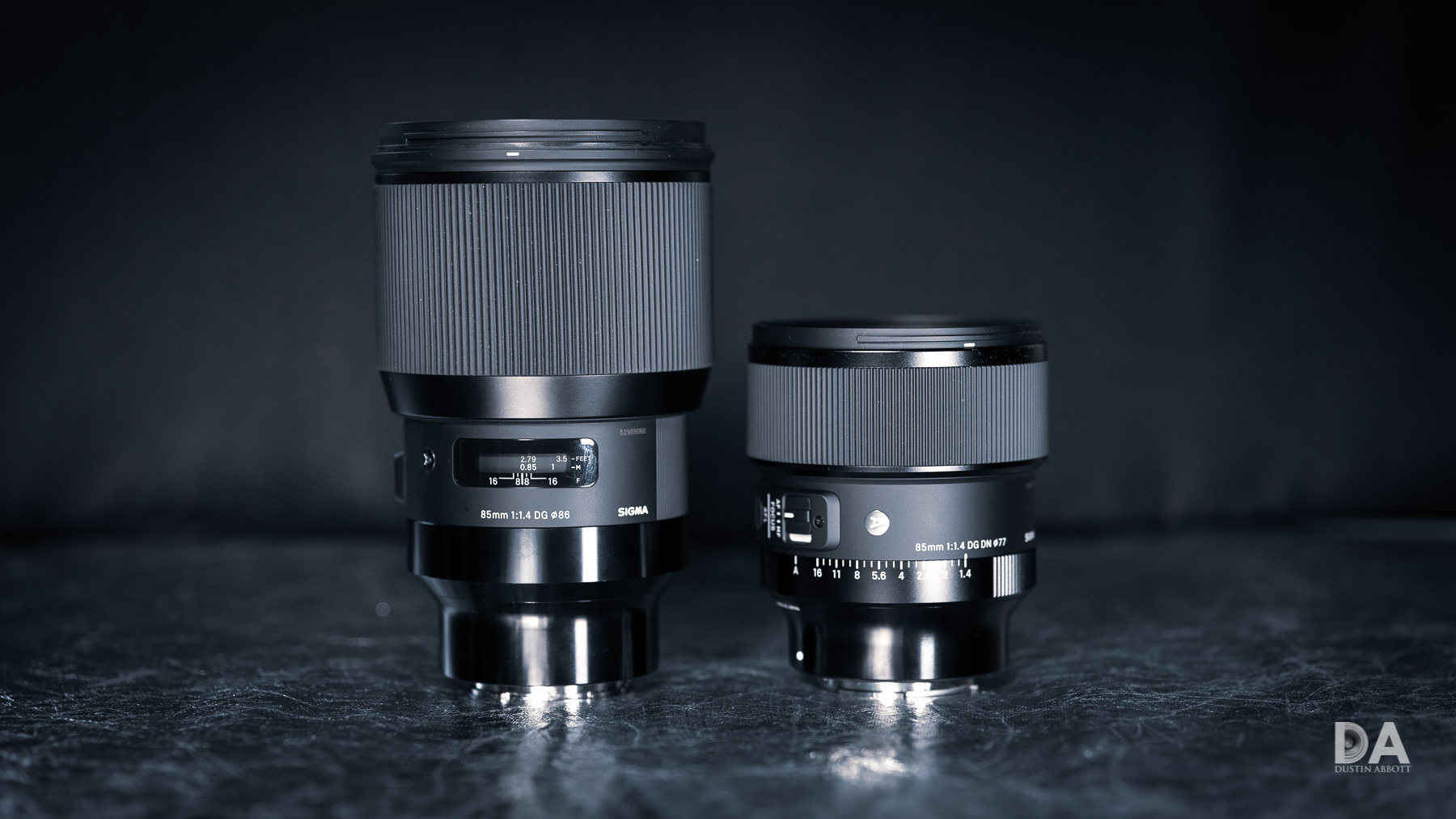
more compact this new lens is. According to my scale, the Sigma FE ART lens (2018) weighs in at a whopping 1213
grams (that’s 2.67 pounds). The 85DN weighs only 626g (1.38 pounds). That is VERY close to HALF the weight. On
that same scale the Sony GM lens weighed in at 821g (1.81lb) and the Samyang was the lightest at 568g (1.25lb).
I measure the new Sigma 85DN at roughly 102mm in length, which compares to 164mm by my measurement for the 2018
Sigma and 115mm by my measurement standard on the Sony GM lens (it’s official length is 108mm), though it is
clearly more than 6mm longer than Sigma 85DN, as you can see in this photo:
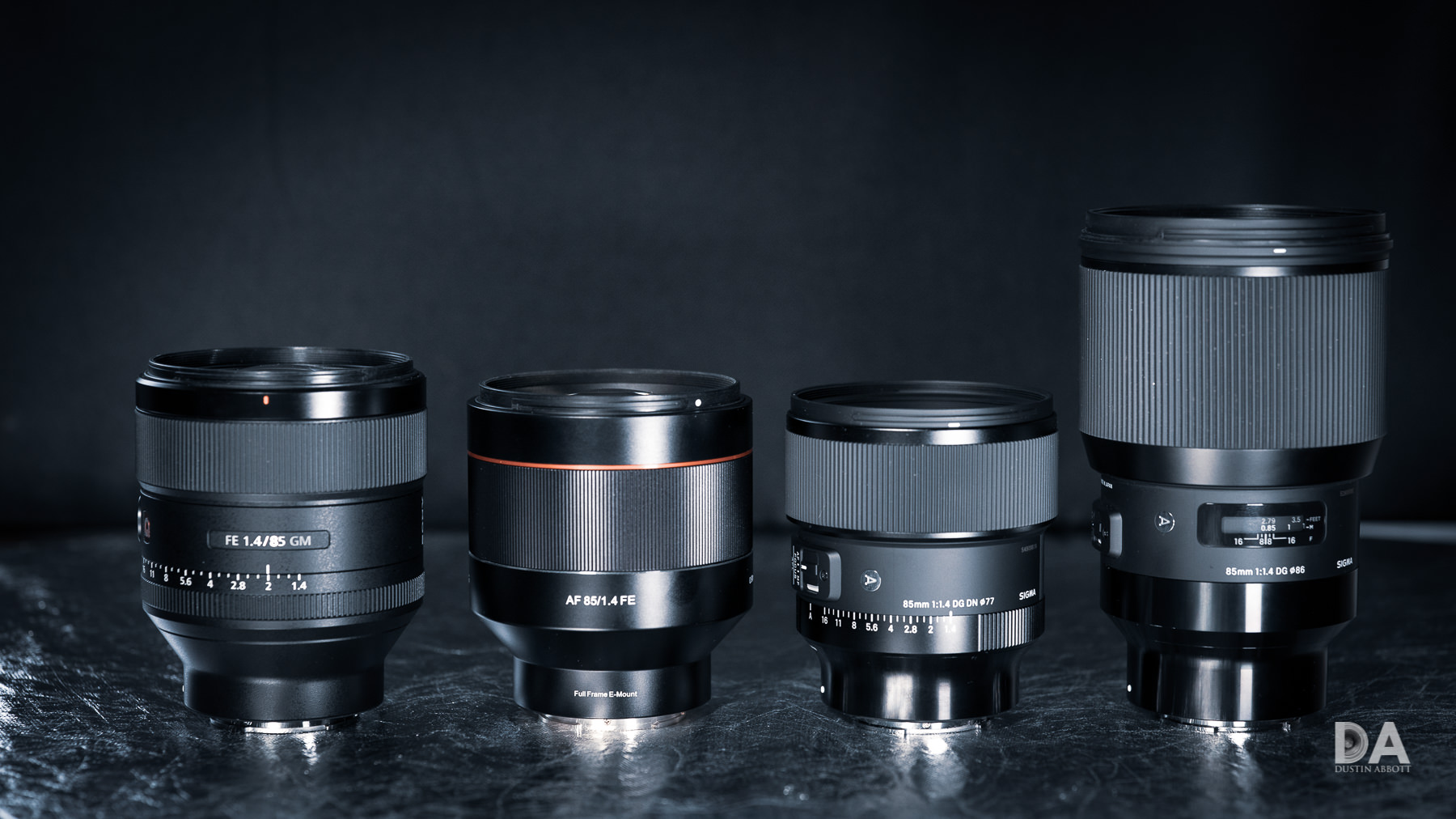
Just as a frame of reference, the Samyang is listed at about 100mm, and it looks to be 2-3mm longer than the
Sigma, so the official Sigma measurement may come in at 97-98mm. *At the time of this review the official
specifications have not been released, so I’m using all of my own measurements here to ensure consistency in
my reporting since I have all of these lenses on hand.
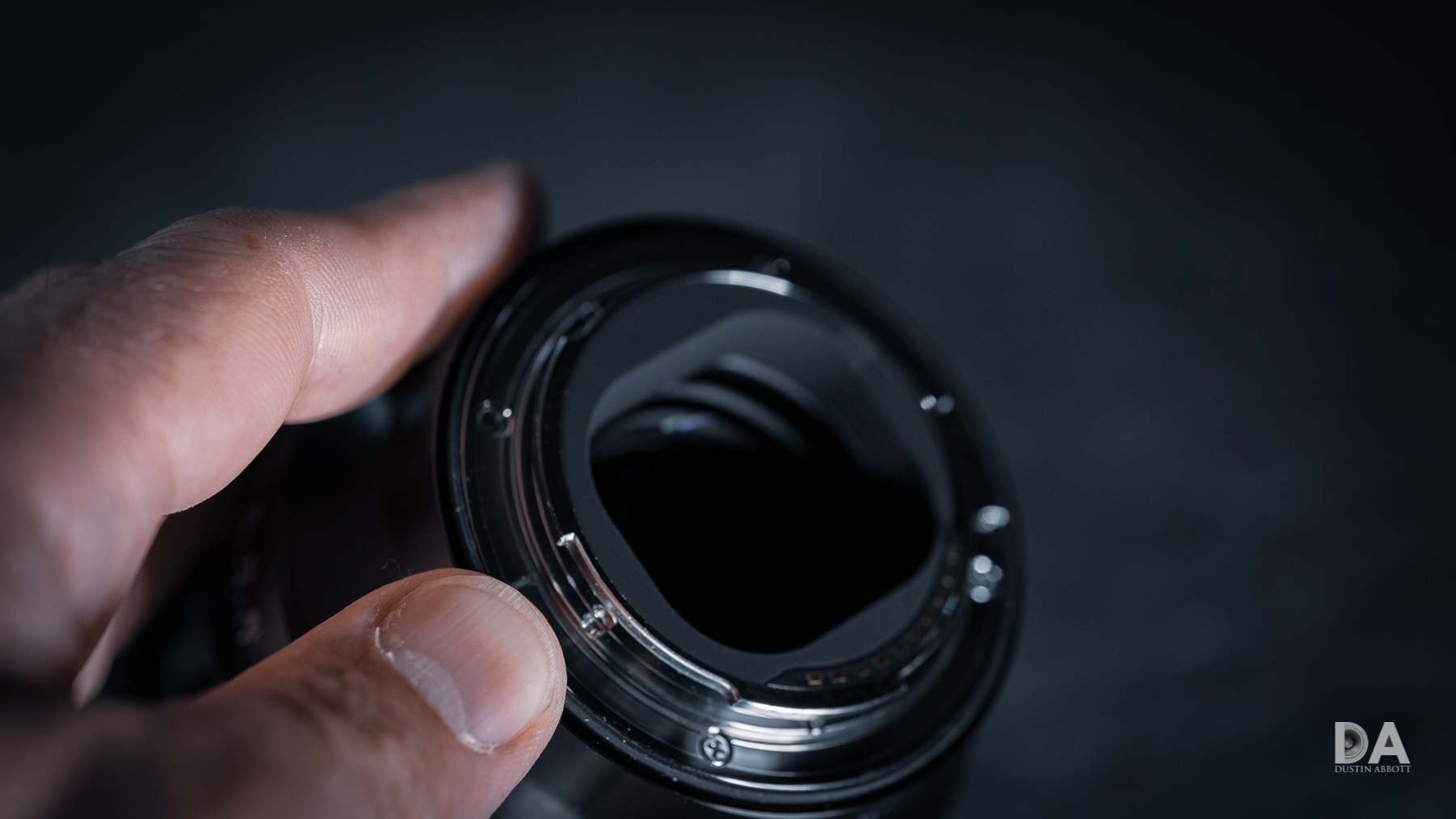
Sigma’s shrinking of this lens is truly impressive, and what impresses me even more is that the lens feels just
as premium as its monstrous predecessor. It’s a great mix of nice materials, including some metal alloys and
engineered plastics. The build quality seems pretty much on par with the GM lens. There’s a weather sealing
gasket at the lens mount, and if the recent trends continue, there should be some internal seals and a good
coating on the front element to complete the weather sealing suite.
Gadget
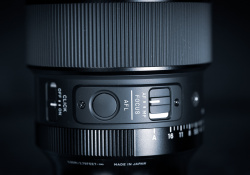
As noted, there are a number of new features on the 85DN that very much bring it in line with the G Master lens
(an $1800 USD lens) offers, though the Sigma will come to market at a much cheaper $1100 USD price point). These
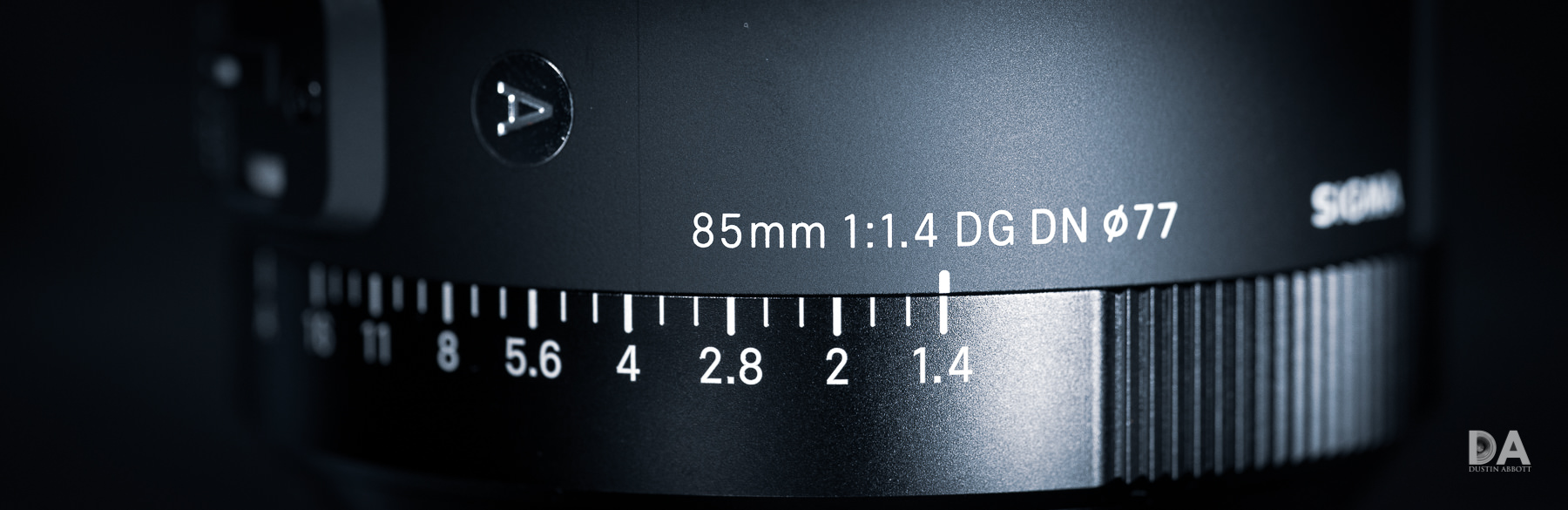
features include a multi-faceted approach to aperture, including an aperture ring with the option of using the
“clicked” version (with one-third stop detents) or, with the flip of a switch, a fully declicked version that
will allow for aperture racking for video. One new feature I’ve never seen is an aperture lock switch, which you
can engage either in the manual aperture portion (this will keep you from inadvertently sliding into “A” [Auto]
position, particularly important if doing aperture racks), or you can engage it when you are Auto aperture mode
to make you that you don’t inadvertently bump the ring and change the aperture without noticing.
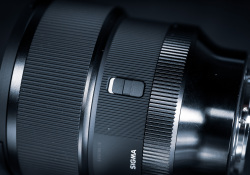
This really gives users the best of all worlds, as for those who don’t like an aperture ring, you can use the
lock and just control the aperture from within the camera (or allow the camera to control aperture) without
being concerned about an inadvertent bump of the ring. You can use the manual aperture ring with clicks (my
personal preference), or declick it if preferred. This is the option that the GM lens gives you as well, though
it doesn’t have the aperture lock. Score one for Sigma!
The aperture iris itself features a higher blade count than the 2018 version. It now has eleven rounded aperture
blades, which, incidentally, equals the tally on the GM lens.
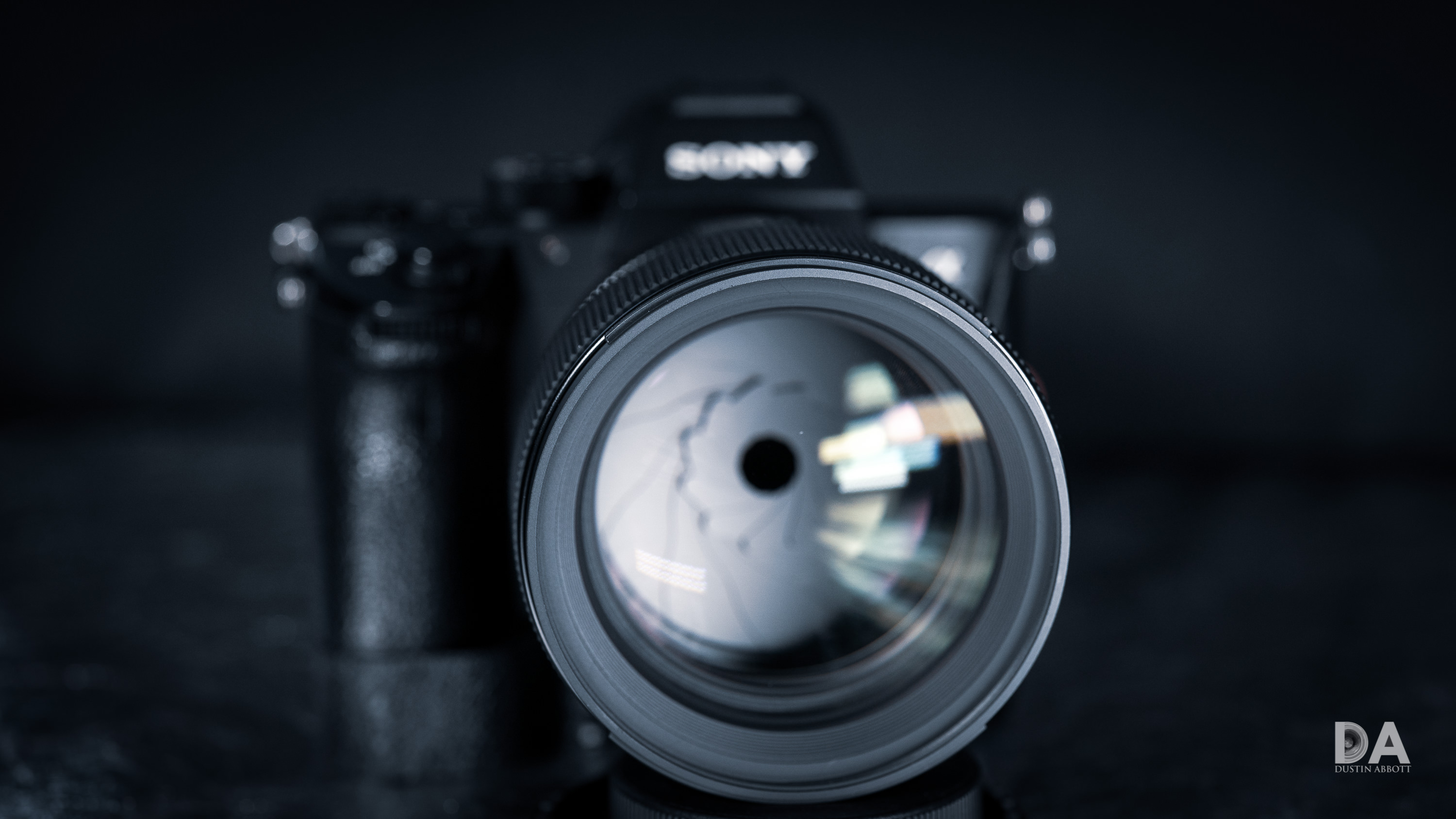
This enables the aperture to keep a more circular shape when stopped down. This series shows the wide open
aperture, the aperture at F2.8, and the aperture at F5.6.
Note that even the F5.6 version shows a nicely rounded shape.
The 85DN also sports an AF/MF switch and a focus hold button which you can program to various functions in the
camera. These also match what is included on the GM lens.
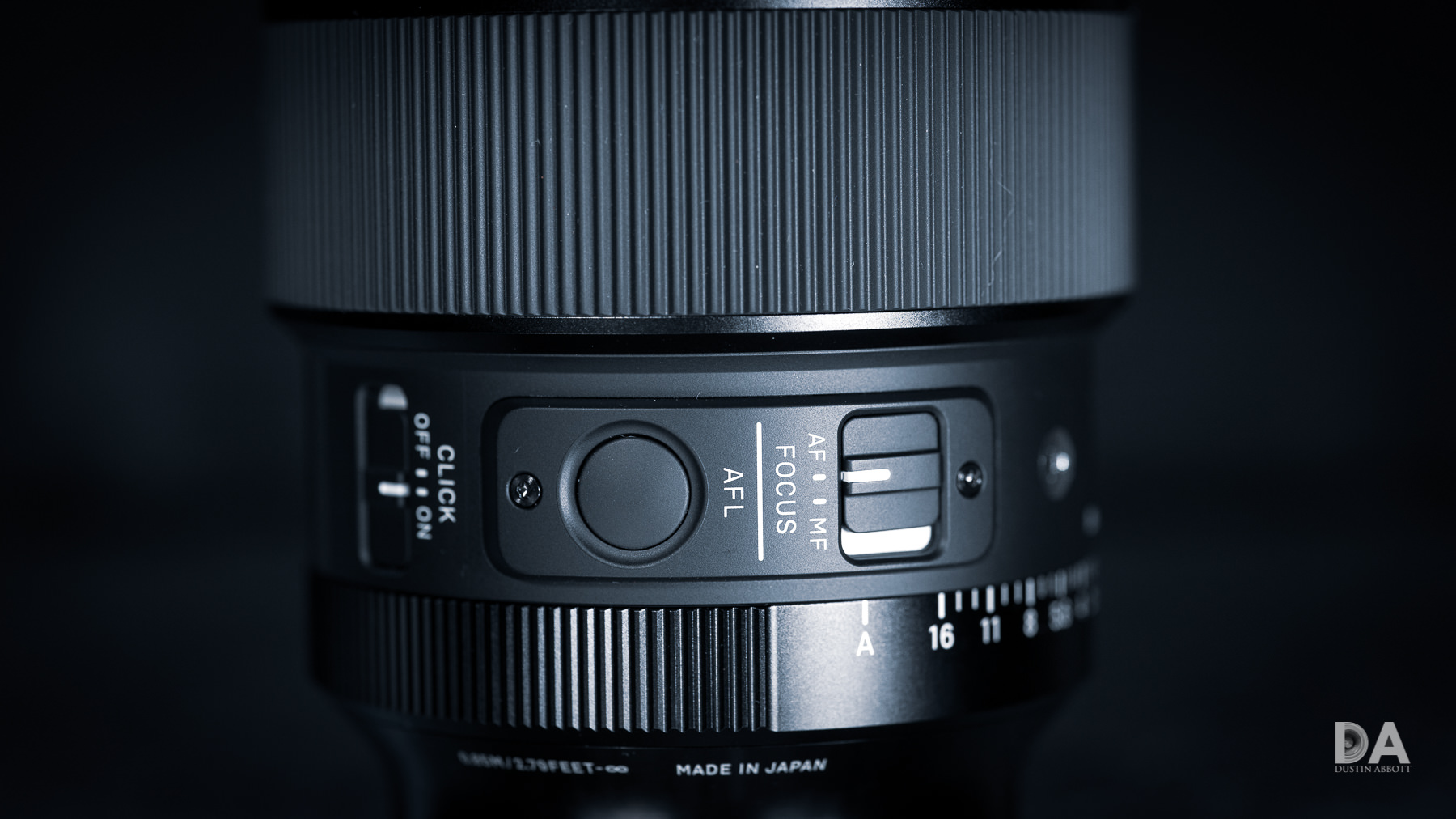
The focus ring itself is nicely ribbed, well positioned, and works nicely. It has good damping and will trigger
an automatic focus assist (magnification of the focus area in the viewfinder or on the LCD) when you start to
turn it in either MF or DMF modes.
The lens hood also gets the premium treatment. It is a little deeper than the GM hood, sports a locking
mechanism, and also has some unique textures to make it more tactile. These include a soft-touch material at the
connection point and a ribbed section to help increase grip for removing it. Very nice!
The front filter size is a much more standard 77mm than the larger 86mm filter thread on the 2018 lens.
One other advantage for the new lens is that while it shares the same 85cm minimum focus distance as the previous
lens, the focal length isn’t a bit short like the 2016/2018 ART lens (one of those quirks I’ve mentioned). I
always found it ironic that the largest lens in the class wasn’t a full 85mm. The byproduct is that that the new
lens has a higher degree of magnification (I’d estimate more like 0.13x or slightly over) and also has a bit
better image quality when viewed at a pixel level.
Sigma has given this lens the ART designation, though the emphasis in the present tense is on the “DN”, which
designates it as a mirrorless design. I have not a single criticism on the build, handling, and design front. I
can’t state strongly enough how happy I am to see Sigma embrace a smaller, lighter philosophy.
Sigma 85mm F1.4 DN Autofocus Performance
I used to approach the autofocus section when reviewing Sigma lenses with some trepidation, as there was a season
where that was a major weakness for them. That hasn’t been the case for any of my FE reviews, however, as
Sigma’s autofocus motors on mirrorless have largely been very good. Check out the quality of focus on this F1.4
shot:
This also hints at the excellent image quality of the lens, as there are no aberrations marring these highly
reflective textures and resolution and contrast are obviously very high.
Sigma has utilized a stepping
motor on this lens for smooth, fast, and quiet operation. This appears to be fastest-focusing 85mm F1.4 lens on
Sony and definitely has an edge on the GM lens in overall performance. It’s quieter and smoother (and the GM has
a somewhat “gritty” sound and feel at times). The focus motor of the 85DN is extremely quiet and is only audible
with your ear pressed against the barrel. It is quiet enough that the on-board mic does not pick up any focus
sounds during video focus or when doing focus pulls. Good news there.
The focus motor is also nicely smooth when doing focus pulls.
Focus speed in AF-C mode is nice and fast, with typical focus changes being near instant and with no drama. Right
out of the box I was seeing focus nailed on all my shots. Pet Eye AF grabbed on perfectly in this shot.
Eye AF worked well in general, and I had essentially perfect focus accuracy with a human subject in the frame
whether they were wearing sunglasses or not.
I had my nephew (not a photographer) grab a shot of my family. The results were perfectly focused, largely thanks
to the flawless eye detect that eliminates most all focus misses with human subjects.
I saw a few minor quirks due to not having final release firmware (a few freezes and an occasional hesitation to
focus on a foreground subject). The former I solved by power cycling the camera and the latter by focusing first
on the ground and then aiming at my subject. When focus was in the right “zone” it grabbed correct focus
instantly…as you can see here:
I’ve been assured that the quirks I saw are corrected in the final release firmware, and I see no reason to
question that based on past experience. Sigma has also shown in times past that they will work to continue to
refine autofocus performance via firmware upgrade (which in the case of Sony will come by running updates
through the camera body like you would with a Sony lens), so there’s a possibility that we might see even better
performance down the road. What was once a weakness for Sigma has become a strength.
Sigma 85DN Image Quality
The Sigma 85DN has an extremely complex 15 element in 11 group optical formula; this is more complex than either
the previous generation Sigma or the GM lens. This was probably necessitated by trying to shrink the size and
still deliver a high end image quality result.
There are essentially two optical flaws here, both of which are also byproducts of the reduced size. These take
the form of a higher than typical amount of pincushion distortion and a fairly strong amount of vignette. You
will only see these if you disable the in-camera corrections, as they will be completely corrected in JPEGs and
even to some minor degree in the RAW files. Here’s what the JPEGs look like if I disable corrections (left) or
enable them (right).
There is some correction of vignette in the RAW files though the distortion remains uncorrected. I didn’t have
access to a RAW correction profile in Lightroom due to reviewing prior to the lens’ public release, so I
corrected everything manually. I found that it took a -11 on the distortion slider and a full +100 and midpoint
to 0 (max correction) on the vignette sliders. Fortunately the distortion corrected fairly linearly and I was
able to get a clean result. Here’s what it looked like before and after correction:
The nature of modern corrections in JPEGs, Video, and then software corrections of RAW files mean that this
shouldn’t be a dealbreaker, and, frankly, I didn’t need to do any correcting to most of my RAWs anyway. This is
an F1.4 image that I shot as a RAW and did nothing to other than raise the shadows a bit on the dog’s face.
The worst case scenario I saw was this image at a wedding.
You can see some of the curvature on the head table due to the distortion. There’s some apparent vignette in the
corners as well. This was a RAW file that is shown just as it came out of camera and is at F1.4.
In this shot, however, the distortion is hardly noticeable because the straight line (horizon) is nearer the
center of the frame.
As I said, I don’t find this to be a deal-breaker for me, personally, but I did want to carefully document it in
case it might be a deal-breaker for you.
There’s literally nothing else to complain about. If I compare it to the current gold standard (the Sony GM
lens), I find that it competes extremely well across the frame.
There’s some give and take at various points, but certainly the GM does not surpass its performance. One thing
that did stand out to me was that the Sigma image was consistently brighter with equal settings compared to the
GM lens. This is something I’ve noticed about the GM lens in the past (I did a massive 6-way
comparison in 2019), and my conclusion is that aperture is perhaps marginally smaller than some other
F1.4 lenses.
I also found that the lens compared well to the 2018 Sigma ART lens, which has been considered one of the
strongest 85mm lenses available. Once again there is some give and take depending on where you look in the
frame. The new lens is really strong midframe, while the edge win goes to the older lens.
Bottom line, however, is that this lens is competing with the very best…despite being much smaller, lighter, and
when compared to the GM lens, much cheaper.
It also doesn’t lose it’s pop when shooting at infinity. Even at F1.4, I was very impressed with the resolution
on this landscape images (crops from enter and lower right edge).
Stopping down to F2 only increases performance, with contrast and resolution bumping up to even higher levels.
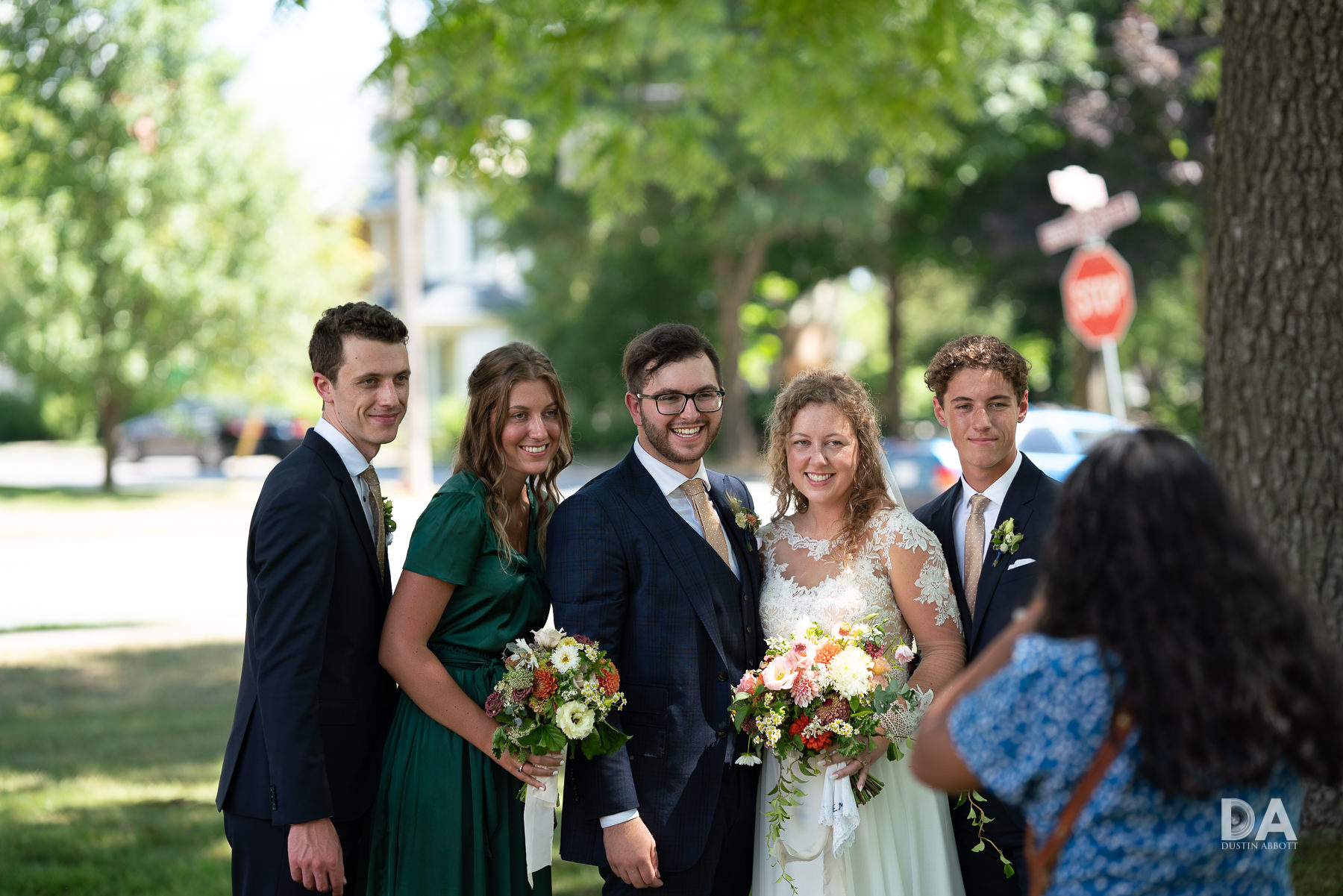
This real world shot at F2 shows amazing detail on the faces of this wedding party.
Stopping down to smaller apertures allows the lens to achieve extraordinarily high resolution results, and you
can see the crispness in the crops from these landscape examples.
It’s worth noting that I personally think you can get sharper real world results with this lens than the 2018 ART
lens due to the superior control of aberrations found on the new lens. In real world, high contrast situations,
I’ve always found the original ART lens to share more fringing than its chart tests suggested. The 85DN is no
“paper tiger”, and it’s better control of real-world aberrations results in sharper, crisper real-world results
in more situations. Take, for example, this crop of numbers on a credit card. Note how the numbers look silver
and sharp on the left image, but have some green fringing on the right side (ART 018).
In another real world result (morning dew on grass), you can see that the bokeh circles look neutral on the 85DN
while you can see purple fringing on the 018 lens. It’s these kinds of real world advantages that make me favor
the newer lens.
Another area of strength is the bokeh from the new lens, which is softer and more pleasing than the older ART
lens and competes very favorably with the GM lens.
I think both the background bokeh…
…and the foreground bokeh look very pleasing.
Here’s a variety of other “bokeh” shots from the lens to give you a flavor for what it can do.
I also noted fairly strong behavior (for this type of lens) against bright lights. It has a better than average
flare resistance.
In many ways it feels like Sigma has managed to blend the strengths of their last two generations of 85mm F1.4
prime lenses. The EX lens had a very pleasing rendering, while the ART lens had higher sharpness and greater
technical achievement, though at the loss of some character. I called the older lens “analog” and the ART lens
“digital”, more clinical in its perfection but losing some goodness in the process. The new 85DN manages to
retain the technical excellent of the ART lens while recovering some of rendering magic that the older lens
had…and I’m really enjoying what Sigma has done with this lens. It joins the 28mm F1.4 ART, the 35mm F1.2 ART
DN, and the 105mm F1.4 ART as some of my favorite Sigma lenses optically. Check out the image
gallery to see more photos than what I can share in this review.
Conclusion
Put simply, I think the new Sigma 85mm F1.4 DN ART is a winner. It does have a few flaws (the distortion and
vignette are very high), but it has so many virtues that it isn’t hard for me to forgive its flaws. I’m loving
the images it produces, which combine great color, high sharpness and contrast, and beautiful bokeh all in one
package.
I’m enjoying the improved autofocus and the effortless way I can shoot even casual portraits and get beautiful,
perfectly focused results.
But I’m also able to be more forgiving because the compact size and bearable weight mean that I’m not having to
accept a major compromise to regularly use the lens. It will fit in my camera bag easily, and is a lens I might
even pack on a trip, whereas the ART 018 or 016 would never make the cut. I think that Sigma is turning an
important corner with this lens, proving that they have matured as a lens maker to the place where they can give
photographers both high optical performance and do it in a reasonably sized package. And it’s that kind of
maturity that I strongly applaud.
And they’ve done while offering as many features as the GM lens but at a price point that is 49% less. Bravo!
Pros:
- Nice build quality including some weather sealing and premium materials
- Huge reduction of size and weight, making this one of the lightest lenses in the class
- As many features as the GM lens
- Autofocus system is quiet, fast, and accurate
- Excellent sharpness both in the lab and the real world
- Nicer bokeh than competing lenses
- Excellent chromatic aberration control
- Good flare resistance
- Beautiful color rendition
- 49% cheaper than the GM lens
There are no reviews yet.